
June 13, 2026
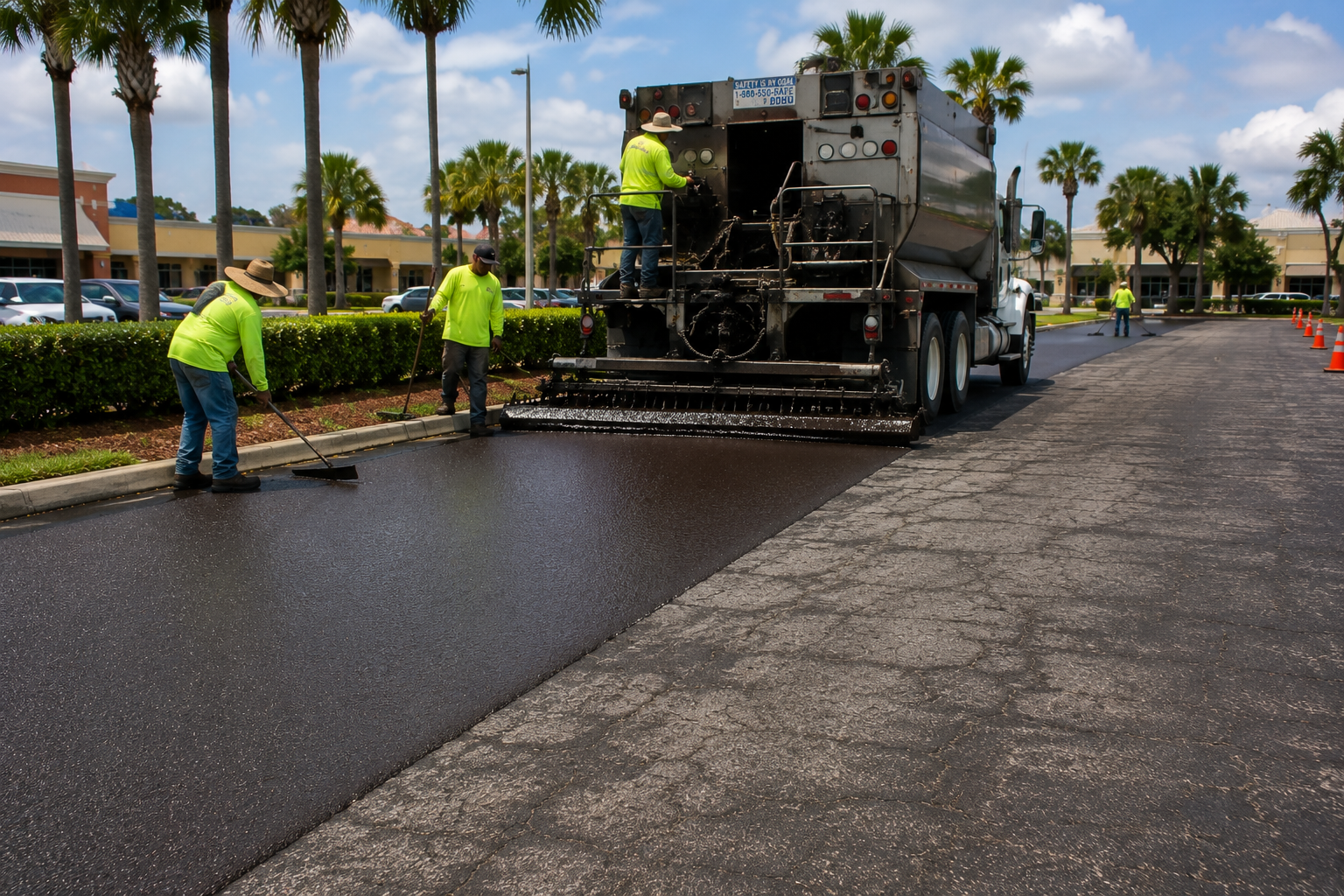
Maintaining asphalt pavement in Florida can be challenging. Property owners, homeowners associations, municipalities, schools, commercial facilities, and property managers throughout Brevard County constantly battle the effects of intense sunlight, heavy rainfall, humidity, and daily traffic.
Over time, even well-constructed pavement begins to show signs of wear. Small cracks appear, surfaces become rough, oxidation causes fading, and water intrusion begins weakening the pavement structure. If left untreated, these issues can eventually lead to costly repairs, resurfacing projects, or complete pavement reconstruction.
Fortunately, there is an effective pavement preservation solution that can help extend pavement life while reducing long-term maintenance costs.
Micro resurfacing has become one of the most popular pavement preservation treatments used throughout Florida because it helps restore aging asphalt surfaces while delaying the need for more expensive rehabilitation projects.
At 321Pave, we help commercial property owners, HOA communities, municipalities, schools, churches, industrial facilities, and business owners throughout Brevard County evaluate pavement preservation strategies that maximize return on investment and protect valuable asphalt assets.
Micro resurfacing is a specialized pavement preservation treatment designed to improve the condition of existing asphalt surfaces.
The process involves applying a thin layer of polymer-modified asphalt emulsion combined with crushed aggregate, mineral fillers, water, and performance-enhancing additives.
Once applied, the material creates a new wearing surface that helps improve pavement performance and appearance.
Unlike complete repaving or asphalt reconstruction, micro resurfacing focuses on preserving and extending the life of existing pavement that remains structurally sound.
This makes it an attractive option for many commercial properties and roadway systems throughout Brevard County.
Florida presents several unique challenges for asphalt surfaces.
The Florida sun is one of the biggest contributors to pavement aging.
Ultraviolet radiation gradually breaks down asphalt binders and causes oxidation.
As oxidation increases, pavement becomes brittle and more susceptible to cracking.
Water is one of asphalt's greatest enemies.
Rainwater enters cracks and weakens the supporting base beneath the pavement.
Constant exposure to moisture contributes to long-term deterioration.
Commercial properties, HOA communities, and public roadways experience continuous traffic loads that wear down pavement surfaces.
Over time, asphalt loses flexibility and becomes increasingly vulnerable to damage.
Micro resurfacing helps address many of these issues before major structural deterioration occurs.
Micro resurfacing creates a new protective surface layer over existing pavement.
The treatment is designed to:
Because the treatment is relatively thin, it is intended for pavements that remain structurally stable.
A professional pavement evaluation helps determine whether micro resurfacing is appropriate.
One of the primary reasons property owners choose micro resurfacing is to extend the useful life of existing pavement.
When applied at the right stage of deterioration, micro resurfacing can significantly delay more expensive rehabilitation projects.
Many pavement management programs utilize micro resurfacing as part of a long-term asset preservation strategy.
Full-depth reconstruction and asphalt replacement can be major capital expenses.
Micro resurfacing typically costs significantly less than complete repaving while still providing meaningful pavement improvements.
For many HOAs, municipalities, and commercial property owners, this cost savings is one of the most attractive benefits.
Micro resurfacing projects can often be completed more quickly than traditional paving projects.
Reduced construction time helps minimize disruptions for:
This is particularly valuable for busy commercial properties and residential communities.
Surface texture plays an important role in vehicle traction.
As asphalt ages, surfaces can become polished and less resistant to skidding.
Micro resurfacing helps restore surface texture and improve skid resistance.
This can contribute to improved safety for drivers, pedestrians, and cyclists.
A faded, weathered parking lot can negatively affect property appearance.
Micro resurfacing restores a clean, uniform surface that significantly improves curb appeal.
Many property owners appreciate the visual transformation that occurs following treatment.
Water penetration remains one of the leading causes of pavement failure.
Micro resurfacing helps create a protective barrier that reduces moisture infiltration and protects the pavement structure.
One of the greatest advantages of micro resurfacing is its ability to postpone more expensive repairs.
When performed proactively, micro resurfacing can delay:
This allows property owners to maximize the life of their existing pavement investment.
HOA communities often use micro resurfacing to preserve private roads while controlling maintenance budgets.
Shopping centers, office parks, and mixed-use developments benefit from improved appearance and pavement protection.
Educational facilities frequently utilize pavement preservation strategies to extend roadway and parking lot life.
Church parking lots benefit from cost-effective maintenance solutions.
Many municipalities use micro resurfacing as part of roadway preservation programs.
Industrial properties benefit from extending pavement life while minimizing disruptions.
Micro resurfacing works best when pavement remains structurally sound but shows signs of surface aging.
Common indicators include:
Gray, faded pavement often responds well to preservation treatments.
Early-stage cracking can often be addressed before larger failures develop.
Traffic-related wear may indicate the need for preventative treatment.
Surface texture improvements can enhance safety.
Many property owners choose micro resurfacing specifically to postpone costly rehabilitation projects.
However, severely deteriorated pavement may require more extensive repairs.
A professional pavement evaluation is the best way to determine suitability.
Property owners often ask about the difference between micro resurfacing and sealcoating.
Primarily protects pavement from UV exposure, moisture, and oxidation.
Best for relatively healthy asphalt.
Provides a thicker treatment that improves surface texture, skid resistance, and overall pavement condition.
Often used when pavement requires more substantial preservation than sealcoating alone can provide.
Both services play important roles in long-term pavement management.
Across Melbourne, Palm Bay, Titusville, Rockledge, Cocoa, Merritt Island, Satellite Beach, Indialantic, and Viera, more property owners are shifting toward proactive maintenance strategies.
Rather than waiting for pavement to fail, many organizations now focus on preserving existing assets through:
This approach often delivers lower lifecycle costs and better long-term pavement performance.
Performance varies depending on traffic volume, weather exposure, and pavement condition.
Yes. In most cases, it is significantly less expensive than complete repaving.
No. Existing potholes and structural failures generally require repair before treatment.
Absolutely. It restores a fresh, uniform pavement surface.
Because it preserves existing pavement rather than replacing it, micro resurfacing is often considered a sustainable pavement preservation strategy.
Yes. Many private communities use micro resurfacing to extend roadway life while controlling maintenance costs.
The most expensive pavement project is often the one that could have been delayed through proactive maintenance.
Micro resurfacing offers a cost-effective way to improve pavement condition, extend service life, enhance appearance, and reduce long-term maintenance expenses.
Whether you manage a shopping center in Melbourne, an HOA in Viera, a church in Palm Bay, a school in Titusville, or a commercial property anywhere in Brevard County, micro resurfacing may provide an excellent solution for preserving your asphalt investment.
321Pave proudly serves commercial properties, homeowners associations, municipalities, schools, churches, and businesses throughout Melbourne, Palm Bay, Titusville, Rockledge, Cocoa, Merritt Island, Satellite Beach, Indialantic, Melbourne Beach, and all of Brevard County.
Contact 321Pave today to schedule a pavement evaluation and learn whether micro resurfacing is right for your property.
If you’re looking for a reliable asphalt paving company in Orlando & Brevard County, FL, our team is ready to help. Whether it’s repairs, resurfacing, or a full paving project, we’ll evaluate your site and recommend the most practical solution.
