
June 13, 2026
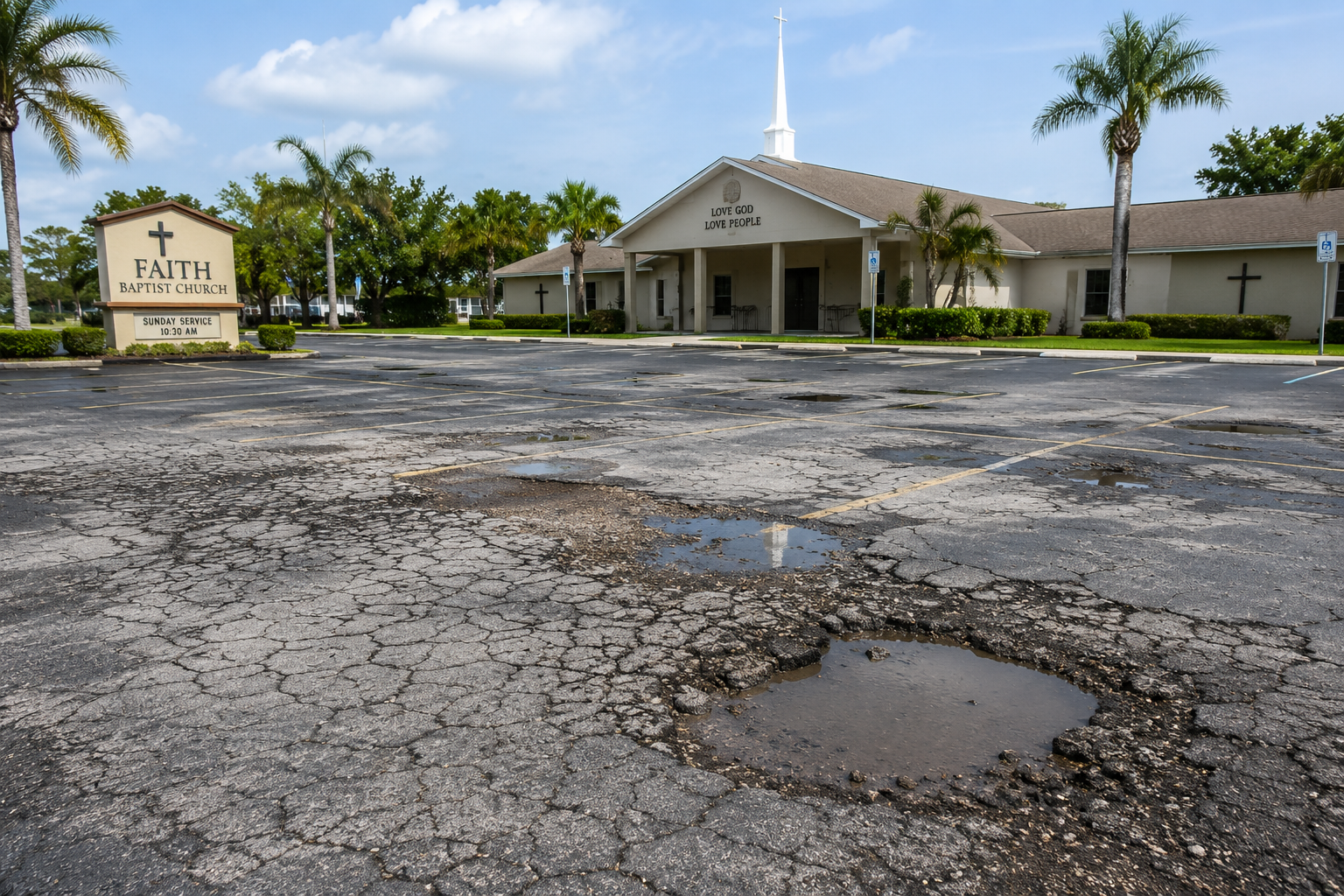
When church leaders discuss stewardship, the conversation often focuses on finances, ministry programs, facilities, and outreach efforts. However, one of the largest physical assets many churches own is often overlooked until problems become impossible to ignore: the parking lot.
A church parking lot serves far more than vehicles. It welcomes first-time visitors, accommodates long-time members, supports weddings and funerals, hosts community outreach events, provides access for seniors and individuals with disabilities, and serves as the gateway to every ministry taking place on the property.
For churches throughout Melbourne, Palm Bay, Rockledge, Cocoa, Titusville, Merritt Island, Viera, and surrounding Brevard County communities, maintaining safe and attractive pavement is an important part of responsible facility stewardship.
The condition of a church parking lot affects safety, accessibility, appearance, visitor impressions, and long-term maintenance costs. By taking a proactive approach to asphalt maintenance, churches can protect their investment while creating a welcoming environment for members and guests.
Many churches invest heavily in their sanctuaries, classrooms, fellowship halls, and landscaping.
Yet the parking lot is often the first thing visitors experience.
Before someone hears a sermon, attends a Bible study, or participates in a church event, they drive through the property and walk across the pavement.
First impressions matter.
A clean, well-maintained parking lot communicates:
Conversely, deteriorating pavement may create concerns before a visitor even enters the building.
For churches actively seeking to welcome new families and visitors, maintaining exterior facilities can play a meaningful role in the guest experience.
Church parking lots operate differently than most commercial properties.
Many businesses experience consistent daily traffic.
Churches often experience concentrated traffic patterns.
Sunday mornings may bring hundreds of vehicles onto church property within a short period of time.
Bible studies, youth programs, and small groups create additional traffic.
Special events frequently increase parking demands.
Food distributions, festivals, concerts, and community gatherings place significant demands on pavement surfaces.
Many churches operate schools, preschools, or daycare programs that generate daily traffic.
Because of these unique patterns, church pavement often experiences periods of intense use followed by quieter periods throughout the week.
Even when traffic levels remain moderate, Florida's environment continuously affects asphalt surfaces.
The Florida sun gradually dries out asphalt and causes oxidation.
As pavement loses flexibility, cracking becomes more common.
Water remains one of the biggest threats to pavement longevity.
Rainwater enters cracks and weakens the structure beneath the surface.
Constant moisture exposure contributes to long-term deterioration.
Storms and severe weather events can accelerate pavement wear.
These environmental factors affect every church parking lot throughout Brevard County.
Many churches postpone maintenance because the pavement still appears functional.
Unfortunately, waiting often leads to significantly higher costs.
Consider a small crack.
When addressed early through crack sealing, repairs are relatively inexpensive.
When ignored, water enters the pavement structure.
Over time, that small crack may become:
The same principle applies to most pavement issues.
Preventative maintenance typically costs far less than major repairs.
Cracks are often the first visible sign of aging asphalt.
Potholes create safety hazards and can damage vehicles.
Visitors rely on visible markings to navigate the property safely.
Accessible parking areas must remain visible and functional.
Standing water often accelerates deterioration.
Asphalt that has turned gray may be showing signs of aging and weather exposure.
Regular inspections help identify these issues before they become major concerns.
The most successful churches approach pavement maintenance proactively.
A yearly pavement assessment helps identify developing issues.
Preventing water intrusion remains one of the most effective maintenance strategies available.
Sealcoating protects asphalt from UV damage, oxidation, and moisture.
Prompt repairs improve safety and prevent larger failures.
Fresh striping improves organization, safety, and accessibility.
Budgeting for future resurfacing projects helps avoid financial surprises.
Churches serve individuals of all ages and abilities.
Maintaining accessible parking areas is an important part of creating an inclusive environment.
ADA-related features often include:
Visible markings and well-maintained surfaces help ensure accessibility for everyone attending services and events.
Parking lot striping is about much more than appearance.
Proper markings help organize traffic and improve safety.
Common church striping includes:
Clearly marked stalls maximize parking capacity.
These improve traffic flow during busy services.
Emergency access must remain available at all times.
Pedestrian crossings help protect members and guests.
Churches often designate parking for staff, visitors, or special needs.
Accessible parking must remain clearly visible.
Fresh striping contributes significantly to a positive visitor experience.
Even with excellent maintenance, all asphalt eventually reaches the point where resurfacing or rehabilitation becomes necessary.
Church leaders should plan ahead for:
Adding a new asphalt layer over existing pavement.
Removing deteriorated asphalt and installing a new surface.
Accommodating church growth and increased attendance.
Correcting water-related issues before they cause major damage.
Planning years in advance helps churches avoid emergency expenditures and allows facility committees to budget responsibly.
Church resources should be managed wisely.
Maintaining a parking lot is not simply an expense—it is an investment in preserving a valuable asset.
Proactive maintenance often results in:
For many churches, preventative maintenance represents one of the most cost-effective facility management strategies available.
Most churches benefit from annual pavement evaluations.
Yes. Sealcoating is one of the most affordable ways to protect asphalt and extend pavement life.
Routine maintenance and early intervention typically provide the greatest savings.
The timing depends on pavement condition, traffic levels, and maintenance history.
Absolutely. Many projects can be phased or scheduled to minimize disruptions.
Accessible parking is an important consideration for most church properties.
A church parking lot is more than pavement. It is part of the ministry experience.
It welcomes guests, supports community outreach, accommodates worship services, and provides access to everything happening on the property.
By treating parking lot maintenance as an ongoing stewardship responsibility, churches can create safer environments, reduce long-term costs, and make positive first impressions on every visitor who arrives.
321Pave proudly serves churches throughout Melbourne, Palm Bay, Rockledge, Cocoa, Titusville, Merritt Island, Viera, Satellite Beach, Indialantic, Melbourne Beach, and all of Brevard County.
Contact 321Pave today to schedule a church property pavement evaluation and develop a long-term maintenance plan that protects your congregation's investment for years to come.
If you’re looking for a reliable asphalt paving company in Orlando & Brevard County, FL, our team is ready to help. Whether it’s repairs, resurfacing, or a full paving project, we’ll evaluate your site and recommend the most practical solution.
