
June 13, 2026
When most people think about asphalt damage, they picture potholes after a heavy rainstorm or pavement failures caused by standing water. While moisture certainly plays a major role in pavement deterioration, one of the most destructive forces affecting asphalt throughout Florida is something property owners experience every day: heat.
In fact, Florida's sunshine—one of the state's greatest attractions—is also one of the biggest threats to asphalt parking lots, private roads, drive lanes, and commercial pavement surfaces.
Across Central Florida, from Orlando and Kissimmee to Melbourne, Palm Bay, Titusville, Daytona Beach, Lakeland, Sanford, Winter Haven, Cocoa, Viera, and beyond, asphalt is subjected to extreme environmental conditions that accelerate aging and shorten pavement lifespan.
The challenge is that heat-related pavement damage happens slowly.
Unlike a pothole that suddenly appears after a storm, sun damage develops gradually over years. Property owners often don't recognize the warning signs until significant deterioration has already occurred.
Understanding how Florida's climate affects asphalt can help property owners make smarter maintenance decisions, extend pavement life, and avoid expensive repair projects.
Florida's climate creates a unique combination of environmental stressors that continuously attack pavement.
Most asphalt surfaces in Central Florida face:
Individually, each factor contributes to pavement wear.
Combined, they create one of the most challenging environments for asphalt in the United States.
Many people assume asphalt is simply crushed stone glued together.
In reality, asphalt is a carefully engineered mixture consisting of:
The stone, sand, and gravel that provide structural strength.
A petroleum-based material that holds the aggregate together.
Fillers that contribute to overall performance.
The binder is what gives asphalt its flexibility.
When pavement is healthy, the binder allows the surface to absorb traffic loads and accommodate minor movement without cracking.
Unfortunately, Florida's heat and sunlight gradually attack this binder over time.
The biggest threat to asphalt isn't actually temperature itself.
It's ultraviolet radiation.
UV rays continuously bombard pavement surfaces throughout the year.
As UV exposure accumulates, the asphalt binder begins to break down.
The oils that keep asphalt flexible slowly evaporate and deteriorate.
This process is called oxidation.
Oxidation is essentially the aging process of asphalt.
Just as prolonged sun exposure can age wood, plastic, and paint, it also ages pavement.
As oxidation progresses, several things begin happening.
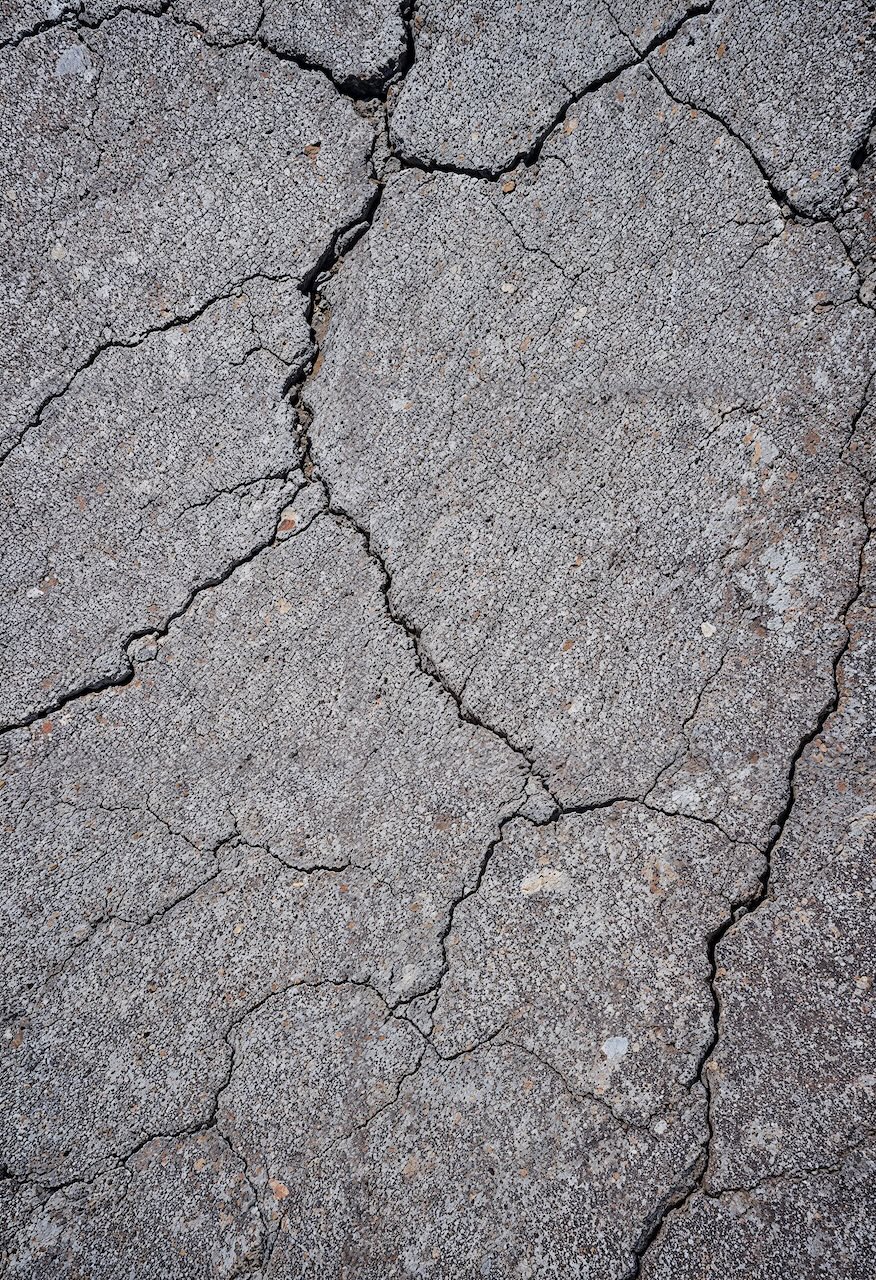
The asphalt binder becomes harder and more brittle.
Healthy asphalt appears rich and black.
Oxidized asphalt gradually fades to gray.
Brittle pavement cannot flex as effectively under traffic loads.
Cracks allow moisture to enter the pavement structure.
As deterioration accelerates, maintenance needs increase.
Many property owners mistakenly view fading as a cosmetic issue.
In reality, color changes often represent one of the earliest warning signs of pavement aging.
Air temperature only tells part of the story.
On a typical summer day in Central Florida, the air temperature may reach 95°F.
However, asphalt surfaces absorb solar radiation extremely efficiently.
Parking lot surface temperatures frequently exceed:
This means your pavement may be operating at temperatures far hotter than the surrounding air.
Every day.
For months.
Year after year.
Heat creates another challenge beyond oxidation.
As temperatures rise, asphalt expands.
As temperatures fall, asphalt contracts.
This process repeats daily.
Consider a shopping center parking lot in Orlando or a church parking lot in Melbourne.
During the afternoon, pavement may reach temperatures above 140°F.
By early morning, temperatures may be 50 degrees cooler.
This constant movement creates stress within the pavement structure.
Over time, repeated expansion and contraction contributes to:
Think of repeatedly bending a paper clip.
Eventually, the metal weakens and breaks.
The same concept applies to asphalt.
Not all pavement ages equally.
Commercial properties frequently experience accelerated deterioration because traffic loads compound environmental damage.
Examples include:
Constant vehicle traffic creates continuous stress.
High traffic volumes increase pavement wear.
Parent pickup lines and bus traffic concentrate loads.
Weekend traffic creates repeated stress patterns.
Heavy trucks place significant pressure on asphalt surfaces.
Private roads experience daily resident and service vehicle traffic.
When heat-related aging combines with heavy traffic, deterioration often accelerates dramatically.
Many property owners postpone maintenance because the pavement still appears functional.
Unfortunately, this approach often increases long-term costs.
The most cost-effective time to maintain asphalt is before major deterioration occurs.
For example:
Minor oxidation and small cracks.
Widespread cracking and surface wear.
Potholes, structural failures, and extensive repairs.
The longer maintenance is delayed, the more expensive the solution typically becomes.
The good news is that property owners are not powerless.
Several preventative maintenance strategies can dramatically slow heat-related deterioration.
Sealcoating acts as a protective barrier between asphalt and the environment.
Benefits include:
For many Central Florida properties, sealcoating remains one of the most cost-effective maintenance investments available.
Small cracks allow water to penetrate the pavement structure.
Crack sealing helps prevent:
Addressing cracks early often prevents larger repairs later.
Annual pavement evaluations help identify problems before they become expensive.
Common issues include:
Routine inspections allow property owners to take proactive action.
For aging pavement that remains structurally sound, micro resurfacing can restore performance and extend lifespan.
Many HOA communities, municipalities, and commercial properties throughout Central Florida use micro resurfacing as part of a long-term pavement preservation strategy.
One of the biggest mistakes property owners make is viewing pavement maintenance as a repair expense.
In reality, pavement should be viewed as a managed asset.
Just like roofing systems, HVAC equipment, and building structures, asphalt requires ongoing care to maximize lifespan.
The most successful property owners focus on:
This approach typically results in:
The sun may be one of Florida's greatest assets, but it is also one of asphalt's greatest enemies.
Every day, ultraviolet radiation, heat, and thermal cycling slowly age pavement throughout Central Florida. While deterioration cannot be eliminated entirely, it can be managed through proactive maintenance and strategic planning.
Whether you manage a shopping center in Orlando, an HOA in Viera, a church in Palm Bay, a school in Melbourne, a medical facility in Daytona Beach, or a commercial property anywhere in Central Florida, understanding how heat affects asphalt is the first step toward protecting your investment.
Routine inspections, crack sealing, sealcoating, micro resurfacing, and long-term pavement management can help extend pavement life, improve appearance, and reduce long-term costs.
If you’re looking for a reliable asphalt paving company in Orlando & Brevard County, FL, our team is ready to help. Whether it’s repairs, resurfacing, or a full paving project, we’ll evaluate your site and recommend the most practical solution.
